
Software for Freight Forwarding and Customs Management Used in Morocco Transit Agency
Introduction: The Digital Revolution in Morocco’s Logistics Landscape
Morocco has positioned itself as a strategic gateway between Europe, Africa, and the Middle East. The kingdom’s logistics sector has experienced unprecedented growth, driven by substantial investments in port infrastructure, industrial zones, and transport networks. The Tanger Med port complex alone handles millions of containers annually, making Morocco a critical hub for international trade and freight forwarding operations.
Within this dynamic environment, transit agencies and freight forwarding companies face mounting pressure to deliver faster, more accurate, and compliant services. Traditional paper-based systems and manual processes can no longer keep pace with the demands of modern supply chain operations. This reality has accelerated the adoption of freight forwarding software and customs management software across Morocco’s logistics industry.
Digital transformation is not merely an option but a competitive necessity for Morocco transit agencies seeking to maintain their market position. The integration of specialized logistics software for Morocco enables companies to manage complex documentation, track shipments in real-time, ensure regulatory compliance, and provide superior customer service. This comprehensive guide explores the essential software solutions that are reshaping how transit agencies operate in Morocco’s competitive freight forwarding landscape.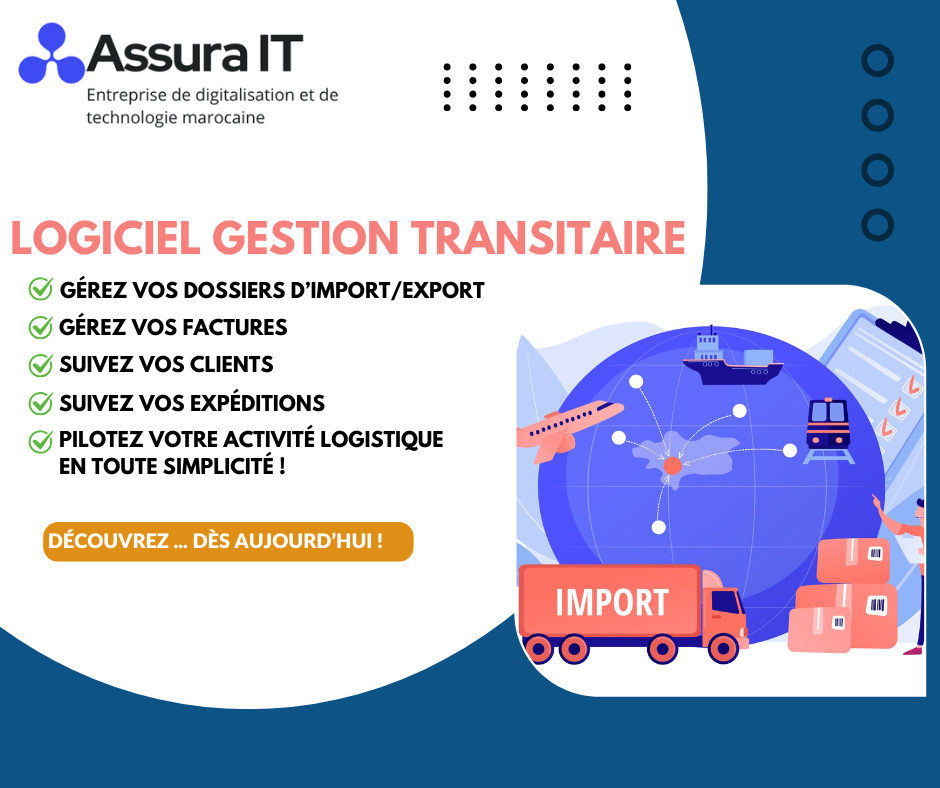
Understanding Freight Forwarding and Customs Operations in Morocco
The freight forwarding industry in Morocco encompasses a wide range of services including cargo consolidation, documentation management, customs brokerage, warehousing, and last-mile delivery. Transit agencies serve as critical intermediaries between shippers, carriers, customs authorities, and consignees, coordinating the movement of goods across international borders.
Morocco’s customs procedures follow international standards while incorporating specific local requirements. The country has implemented the Automated System for Customs Data (BADR) to modernize customs clearance processes. Transit agencies must navigate complex tariff classifications, valuation procedures, certificate of origin requirements, and various trade agreements that Morocco has signed with the European Union, African nations, and other trading partners.
The operational workflow of a typical Morocco transit agency involves multiple touchpoints. Upon receiving cargo booking requests, freight forwarders must verify documentation completeness, arrange transportation, prepare customs declarations, coordinate with port authorities, manage warehousing when necessary, and ensure timely delivery to final destinations. Each step generates data that must be accurately captured, processed, and shared with relevant stakeholders.
Traditional methods of managing these workflows through spreadsheets, email communications, and paper documents create significant inefficiencies. Information silos develop when different departments use disconnected systems. Manual data entry introduces errors that can result in customs delays, penalties, or shipment holds. The lack of real-time visibility prevents proactive problem-solving and diminishes customer satisfaction.
Modern customs management software addresses these challenges by creating a unified digital platform that connects all aspects of freight forwarding operations. These systems integrate with customs authorities, shipping lines, airlines, trucking companies, and warehouse management systems to create seamless information flows. The result is reduced processing time, fewer errors, better compliance, and enhanced operational efficiency.
Critical Challenges Facing Morocco Transit Agencies
Transit agencies operating in Morocco confront numerous operational challenges that impact their ability to compete effectively and deliver exceptional service. Understanding these pain points is essential for recognizing why freight forwarding software has become indispensable for sustainable business growth.
Documentation complexity represents one of the most significant hurdles. International shipments require commercial invoices, packing lists, bills of lading, certificates of origin, sanitary certificates, and various other documents depending on commodity types and destination countries. Managing these documents manually across multiple shipments creates administrative burdens and increases the risk of missing or incorrect paperwork that can delay customs clearance.
Regulatory compliance poses another substantial challenge. Morocco’s customs regulations evolve continuously as the country updates trade policies and harmonizes procedures with international standards. Transit agencies must stay current with tariff changes, prohibited goods lists, licensing requirements, and documentation standards. Non-compliance can result in severe penalties, shipment seizures, and reputational damage that affects long-term business viability.
Communication breakdowns frequently occur when multiple parties involved in a shipment use different systems or communication methods. Shippers need updates on cargo status, customs officers require specific documentation, carriers provide vessel schedules, and warehouse operators manage inventory. Coordinating these interactions through phone calls, emails, and messaging applications becomes increasingly unmanageable as shipment volumes grow.
Visibility gaps prevent transit agencies from providing the proactive service that modern customers demand. When freight forwarders cannot access real-time information about where shipments are located, whether customs clearance is complete, or when delivery will occur, they cannot effectively manage customer expectations or resolve issues before they escalate.
Cost management difficulties arise when transit agencies lack accurate tools for calculating landed costs, comparing carrier rates, and tracking expenses across shipments. Without comprehensive financial visibility, companies struggle to price services competitively while maintaining healthy profit margins. Hidden costs and billing errors erode profitability and damage client relationships.
The absence of data analytics capabilities means that many transit agencies operate reactively rather than strategically. Without insights into performance metrics, bottleneck identification, carrier performance comparison, and customer profitability analysis, management cannot make informed decisions about operational improvements or business development priorities.
These challenges are not insurmountable. Transit agencies that implement comprehensive logistics software for Morocco gain the tools necessary to transform these pain points into competitive advantages. Digital platforms designed specifically for freight forwarding and customs management enable automation, integration, visibility, and intelligence that fundamentally improve how transit agencies operate.
The Imperative of Digital Transformation in Customs and Freight Forwarding
The logistics industry worldwide is experiencing a digital revolution, and Morocco’s freight forwarding sector cannot remain isolated from this transformation. Companies that resist digitization risk becoming obsolete as competitors leverage technology to deliver faster, more accurate, and more cost-effective services.
Digital transformation in freight forwarding extends beyond simply computerizing existing processes. It fundamentally reimagines how transit agencies operate by creating data-driven workflows, automating repetitive tasks, and enabling real-time collaboration across the supply chain ecosystem. This transformation touches every aspect of operations from initial customer inquiries through final delivery and financial settlement.
Customer expectations have evolved dramatically in the digital age. Shippers accustomed to tracking personal packages in real-time through courier services now demand the same visibility for commercial freight shipments. They expect instant access to shipping documentation, automated status notifications, and self-service portals where they can manage their logistics needs independently. Transit agencies that cannot meet these expectations lose business to more technologically advanced competitors.
The competitive landscape increasingly favors early adopters of freight forwarding software. Companies that have digitized their operations can process more shipments with fewer staff, respond more quickly to customer inquiries, and scale their businesses without proportionally increasing overhead costs. This operational leverage creates pricing advantages that make it difficult for traditional operators to compete.
Regulatory pressures also drive digital adoption. Customs authorities worldwide, including Morocco’s Administration des Douanes et Impôts Indirects, continue advancing electronic data interchange requirements. The transition from paper declarations to fully digital customs procedures means that transit agencies must invest in systems capable of generating and submitting electronic documents in compliance with official specifications.
Data security and business continuity concerns make digital systems essential. Paper documents can be lost, damaged, or destroyed, creating catastrophic consequences for transit agencies. Cloud-based customs clearance software ensures that critical business data is backed up, accessible from anywhere, and protected against hardware failures or natural disasters. This resilience has become particularly important as supply chain disruptions increase in frequency and severity.
The integration capabilities of modern logistics software for Morocco create network effects that multiply value. When freight forwarding systems connect with customs authorities, port communities, carriers, and customers through electronic data interchange, the entire logistics ecosystem becomes more efficient. Information flows automatically between parties, reducing delays and errors while enabling unprecedented coordination.
Artificial intelligence and machine learning embedded within advanced freight forwarding software provide capabilities that human operators cannot match. These systems can automatically classify goods according to Harmonized System codes, identify documentation discrepancies before submission, predict customs clearance times, and recommend optimal routing based on historical performance data. Such intelligence transforms freight forwarding from a primarily manual profession into a technology-enabled service industry.
The return on investment for implementing comprehensive customs management software typically materializes quickly. Reduced labor costs from automation, fewer costly errors, faster customs clearance leading to improved cash flow, and the ability to serve more customers without proportional staff increases combine to generate measurable financial benefits. Many transit agencies report that their software investments pay for themselves within the first year of operation.
Essential Features of Freight Forwarding and Customs Management Software
Selecting the right software solution requires understanding which features directly address the operational challenges that Morocco transit agencies face daily. Comprehensive platforms integrate multiple functional modules into unified systems that support end-to-end freight forwarding workflows.
Shipment management serves as the core module of any freight forwarding software. This functionality enables transit agencies to create shipment records, assign house and master bill of lading numbers, track cargo status through all transportation legs, manage container bookings, and coordinate pickup and delivery appointments. Robust shipment management systems maintain complete audit trails showing who performed what actions and when, which proves invaluable for quality control and dispute resolution.
Documentation automation dramatically reduces the time freight forwarders spend creating shipping documents. Modern systems generate commercial invoices, packing lists, bills of lading, delivery orders, and numerous other documents automatically by pulling data from shipment records. Template libraries ensure consistent formatting while supporting customization for specific customer or regulatory requirements. Electronic document management eliminates paper storage needs and enables instant retrieval of any document from any location.
Customs clearance integration represents perhaps the most critical feature for Morocco transit agencies. Effective customs management software connects directly with Morocco's BADR system, enabling electronic submission of customs declarations, automated calculation of duties and taxes, real-time status tracking of clearance procedures, and electronic receipt of release notifications. This integration eliminates manual data entry into separate customs systems while ensuring declaration accuracy and regulatory compliance.
Tariff classification tools help freight forwarders correctly determine Harmonized System codes for imported and exported goods. Incorrect classification can result in underpayment or overpayment of duties, customs penalties, and shipment delays. Intelligent classification systems use product descriptions and historical data to suggest appropriate codes while flagging items that require expert review or additional documentation.
Rate management functionality enables transit agencies to maintain current pricing information from airlines, shipping lines, trucking companies, and other service providers. Comprehensive rate databases support automatic quotation generation, helping sales teams respond quickly to customer inquiries with accurate pricing. When combined with profitability analysis tools, rate management ensures that quoted prices cover costs while delivering acceptable margins.
Financial management modules track all costs associated with shipments including freight charges, customs duties, handling fees, storage costs, and various surcharges. These systems generate detailed invoices for customers while managing accounts payable to service providers. Integration with accounting software eliminates duplicate data entry while ensuring that financial records accurately reflect operational activity.
Warehouse management capabilities support transit agencies that operate their own storage facilities or manage inventory for customers. These modules track goods receipt, storage location assignments, inventory levels, and outbound shipment preparation. Barcode scanning and automated identification technologies ensure inventory accuracy while reducing manual labor requirements.
Communication tools embedded within freight forwarding software centralize all shipment-related correspondence. Email integration captures messages automatically and associates them with relevant shipments. Automated notification systems keep customers informed about shipment milestones, documentation requirements, and potential delays without requiring manual intervention from operations staff.
Reporting and analytics transform operational data into actionable business intelligence. Standard reports cover operational metrics like shipment volumes, clearance times, carrier performance, and financial results. Advanced analytics identify trends, highlight exceptions, and provide predictive insights that support strategic decision-making. Customizable dashboards give managers real-time visibility into key performance indicators.
Mobile accessibility extends freight forwarding software beyond office environments. Field staff using smartphones or tablets can update shipment status, capture delivery signatures, photograph cargo conditions, and access critical information while visiting ports, warehouses, or customer locations. This mobility eliminates delays associated with returning to offices to update systems.
Security features protect sensitive commercial and personal data that transit agencies handle. Role-based access controls ensure that employees can only view and modify information appropriate to their responsibilities. Encryption protects data during transmission and storage. Audit logs track all system access and changes, supporting compliance with data protection regulations.
Companies seeking to implement these capabilities should explore comprehensive solutions available from experienced software providers. Transit agencies interested in modern platforms designed specifically for logistics operations can find valuable resources at https://assura-it.com/ to understand how integrated systems address industry-specific requirements.
Transformative Benefits for Morocco Transit Agencies
Implementation of comprehensive logistics software for Morocco generates measurable improvements across all aspects of transit agency operations. These benefits extend beyond mere cost savings to encompass competitive advantages that drive business growth and customer loyalty.
Operational efficiency improvements manifest immediately after software deployment. Automated workflows eliminate redundant data entry, reduce document preparation time from hours to minutes, and enable staff to process significantly more shipments without working longer hours. This productivity gain allows transit agencies to handle growing business volumes without proportionally increasing headcount, improving profitability while maintaining service quality.
Customs clearance acceleration directly impacts customer satisfaction and cash flow. When customs management software ensures that declarations are accurate and complete upon first submission, clearance times decrease substantially. Shipments move through customs in hours rather than days, reducing storage costs, minimizing demurrage charges, and enabling faster delivery to final customers. This speed creates competitive differentiation that attracts new business.
Error reduction protects transit agencies from costly mistakes that damage profitability and reputation. Automated data validation prevents incomplete or inconsistent information from reaching customs authorities. System-enforced workflows ensure that required approvals are obtained before critical actions occur. Document comparison tools identify discrepancies before submission, avoiding rejections and delays. The cumulative effect of these safeguards is a dramatic decrease in exceptions that require expensive corrective actions.
Compliance assurance becomes systematized rather than reliant on individual knowledge. Freight forwarding software embedded with regulatory rules ensures that shipments are processed according to current customs requirements. Automatic updates incorporate regulatory changes, eliminating the risk that staff continue following outdated procedures. Complete audit trails document compliance activities, supporting successful outcomes during customs audits or investigations.
Customer service excellence becomes achievable when transit agencies can provide instant, accurate responses to status inquiries. Self-service portals allow customers to track shipments, download documents, and submit booking requests at their convenience without waiting for email responses or phone callbacks. Proactive notifications about shipment milestones, potential delays, or documentation requirements demonstrate professionalism that builds long-term client relationships.
Financial visibility enables precise profitability analysis at shipment, customer, and business unit levels. Transit agencies can identify which services generate the best margins, which customers are most profitable, and where operational costs can be reduced. This intelligence supports strategic pricing decisions, customer segmentation strategies, and resource allocation priorities that maximize overall business performance.
Scalability becomes inherent when operations are digitized. Adding new customers, opening additional offices, or expanding into new service lines requires minimal incremental system costs. Cloud-based architectures eliminate infrastructure investments while supporting unlimited user growth. This scalability enables ambitious transit agencies to pursue aggressive growth strategies without technology constraints.
Risk management improves through enhanced visibility and control. Real-time monitoring identifies shipments at risk of delays, enabling proactive intervention before problems escalate. Financial controls prevent unauthorized charges or pricing errors. Data backup and disaster recovery capabilities protect against catastrophic data loss. These risk mitigations protect business continuity and preserve company reputation.
Business intelligence derived from comprehensive data analytics reveals opportunities for strategic improvements. Transit agencies can analyze carrier performance to identify the most reliable partners, evaluate trade lane profitability to focus sales efforts appropriately, and forecast capacity requirements to support expansion planning. These insights transform reactive operations into strategic business management.
Organizations evaluating software solutions should examine proven platforms that deliver these benefits. Freight forwarders seeking to understand how comprehensive customs clearance software can transform their operations may find detailed information at https://assura-it.com/ regarding modern solutions designed for the logistics industry.
Ensuring Compliance with Moroccan Customs Regulations
Morocco’s customs framework combines international best practices with specific national requirements that transit agencies must navigate successfully. Compliance failures result in penalties, shipment delays, and reputational damage that can seriously impact business viability. Specialized customs management software plays an essential role in maintaining consistent regulatory adherence.
The Moroccan customs administration operates the BADR system as its primary electronic platform for customs declarations and clearance procedures. Transit agencies must submit declarations electronically using specific formats and data structures prescribed by customs authorities. Manual preparation of these declarations is time-consuming and error-prone. Integrated software solutions that connect directly with BADR automate declaration generation while ensuring compliance with technical specifications.
Tariff classification requirements demand that imported goods are assigned correct Harmonized System codes that determine applicable duty rates. Morocco’s tariff schedule contains thousands of classification codes with subtle distinctions that significantly affect duty calculations. Misclassification, whether accidental or intentional, can result in substantial penalties. Advanced freight forwarding software includes classification databases and intelligent search tools that help freight forwarders identify correct codes while documenting the rationale for classification decisions.
Valuation procedures require that customs declarations accurately reflect the transaction value of imported goods including adjustments for freight, insurance, royalties, and other elements specified in valuation regulations. Incorrect valuations can trigger customs audits, duty reassessments, and penalties. Comprehensive logistics software for Morocco maintains detailed cost breakdowns that support accurate valuation while generating documentation that demonstrates compliance during potential examinations.
Certificate of origin requirements vary depending on the trading partner and applicable preferential trade agreements. Morocco’s free trade agreements with the European Union, Turkey, certain Arab nations, and African countries provide duty reductions or eliminations when goods meet origin criteria. Transit agencies must ensure that appropriate origin certificates are obtained and submitted with customs declarations. Software systems that track origin certificate requirements, monitor expiration dates, and flag missing documentation help ensure that shippers receive applicable duty benefits while maintaining compliance.
Restricted and prohibited goods lists require careful monitoring. Certain commodities cannot be imported into Morocco without specific licenses or are prohibited entirely. Attempting to clear such goods without proper authorization results in seizures and serious legal consequences. Modern customs management software includes restricted goods databases that screen shipments during booking, alerting staff to licensing requirements before cargo arrives at customs.
Documentary requirements extend beyond standard commercial invoices and packing lists to include health certificates for agricultural products, conformity certificates for certain manufactured goods, fumigation certificates for wooden packaging materials, and numerous other specialized documents. Managing these requirements manually across diverse commodity types creates substantial compliance risk. Automated systems that maintain requirement matrices based on commodity codes, origin countries, and current regulations ensure that transit agencies obtain necessary documents before customs presentation.
Post-clearance audit procedures employed by Moroccan customs mean that compliance obligations continue after goods are released. Customs authorities may examine company records years after importation to verify that declarations were accurate and complete. Comprehensive freight forwarding software maintains detailed electronic records of all shipment documentation, cost breakdowns, and customs declarations, supporting successful outcomes during these retrospective examinations.
Advance manifest requirements at Moroccan ports and airports obligate transit agencies to submit cargo information before vessel or aircraft arrival. Failure to comply with manifest submission deadlines can result in fines and operational delays. Integrated systems that automatically generate and transmit advance manifests based on shipment data ensure consistent compliance with these requirements.
Companies seeking comprehensive solutions that address Moroccan regulatory requirements should evaluate platforms designed specifically for customs compliance. Transit agencies can explore how specialized software ensures adherence to evolving regulations by visiting https://assura-it.com/ for information about systems that incorporate Morocco-specific compliance features.
Understanding how freight forwarding software performs in actual operational situations helps transit agencies appreciate its practical value. The following scenarios illustrate how modern systems address common challenges that Morocco transit agencies encounter regularly.
Scenario one involves a textile manufacturer in Europe shipping a large order of finished garments to a retailer in Morocco. The shipper contacts the transit agency requesting a quotation for ocean freight from Barcelona to Casablanca including customs clearance and inland delivery to Marrakech. Using integrated rate management tools, the sales representative instantly accesses current freight rates from multiple carriers, calculates landed costs including duties and taxes based on garment classifications and declared values, and generates a comprehensive quotation within minutes. The customer accepts the quotation, and the sales representative creates a shipment record that automatically generates a booking request to the selected carrier.
As the shipment progresses, the operations team receives electronic notifications when the container is loaded at origin, when the vessel departs Barcelona, and when it approaches Moroccan waters. Prior to vessel arrival, the customs clearance module automatically prepares the import declaration by pulling product descriptions, values, and classification codes from the shipment record. The system validates the declaration against customs rules, calculates duties based on current tariff rates, and submits the declaration electronically to the BADR system. Customs officers review the declaration, request a physical examination, and the system notifies the operations team immediately. After inspection is completed satisfactorily, customs releases the shipment electronically, and the system automatically arranges inland transport to Marrakech.
Throughout this process, the customer receives automated email notifications at each milestone without any manual intervention from the transit agency staff. The shipper can log into a customer portal to view real-time shipment status, download bills of lading and customs declarations, and track the inland delivery progress. Upon final delivery, the system generates a comprehensive invoice covering all charges, integrates the financial data with the accounting system, and emails the invoice to the customer. This entire workflow is managed efficiently by two operations staff members who simultaneously handle dozens of other shipments through the same integrated platform.
Scenario two demonstrates how customs management software addresses complex regulatory requirements. A pharmaceutical company needs to import medical equipment into Morocco requiring certification from health authorities. When the transit agency creates the shipment record, the system automatically flags that medical equipment requires a certificate of conformity from Morocco’s Ministry of Health. The operations team uses the documentation module to request the certificate from the customer, and the system tracks this pending requirement, preventing premature customs declaration submission.
Once the certificate is received, the staff uploads it to the shipment record where it is associated with specific invoice lines covering the medical equipment. When preparing the customs declaration, the system automatically includes references to the health certificate and attaches the electronic document to the BADR submission. Customs officers can immediately access the required certificate, eliminating the need for physical document delivery and accelerating the clearance process. The complete electronic record of all certificates and approvals remains accessible for potential post-clearance audits years into the future.
Scenario three illustrates the value of financial management capabilities. A transit agency handles hundreds of shipments monthly for a major import/export company. Previously, billing required staff to manually compile charges from carrier invoices, customs duty payment receipts, handling fees, and various other sources. This process was time-consuming, error-prone, and frequently resulted in delayed billing that impacted cash flow.
After implementing comprehensive freight forwarding software, the financial module automatically captures all costs as they occur. Carrier charges are recorded when bookings are made, duty amounts are calculated during customs declaration preparation, handling fees are applied according to tariff schedules, and any extraordinary costs are entered by operations staff. At month-end, the system automatically generates consolidated invoices covering all shipments for each customer, with detailed breakdowns showing every charge. Customers can review invoices online, compare charges against original quotations, and approve payment electronically. The transit agency’s cash flow improves substantially because billing occurs promptly, while disputes decrease because invoice accuracy and transparency increase.
Scenario four highlights warehouse management integration. A transit agency operates a bonded warehouse where imported goods are stored pending customs clearance or re-export. Without integrated systems, tracking warehouse inventory, managing customs documentation, and coordinating outbound shipments required multiple disconnected systems and substantial manual reconciliation.
After deploying integrated logistics software for Morocco, the warehouse management module tracks goods receipt, assigns storage locations, maintains real-time inventory balances, and coordinates with the customs module to manage bonded status. When customers request cargo release, the system automatically generates customs declarations for the specific goods being cleared, calculates duties accurately based on stored product data, and updates warehouse inventory simultaneously. Physical inventory matches system records consistently, regulatory compliance is maintained effortlessly, and operational efficiency improves dramatically.
These scenarios demonstrate that effective software implementation transforms theoretical capabilities into tangible operational improvements. Transit agencies seeking to achieve similar benefits should investigate comprehensive platforms that integrate all aspects of freight forwarding operations. Organizations interested in exploring proven solutions can learn more about integrated systems designed specifically for logistics operations at https://assura-it.com/ where detailed information about modern freight forwarding platforms is available.
Strategic Considerations for Selecting the Right Software
Choosing appropriate freight forwarding software represents a critical business decision that will impact operations for many years. Transit agencies must evaluate multiple factors beyond initial purchase price to ensure successful implementation and long-term value realization.
Functional completeness should be the primary evaluation criterion. Software that addresses only some operational requirements forces transit agencies to maintain multiple systems, creating data silos and integration challenges. Comprehensive platforms that manage shipments, customs declarations, documentation, financials, warehousing, and customer communications within a unified environment deliver superior value by eliminating redundant data entry and ensuring information consistency.
Morocco-specific capabilities are essential for transit agencies operating in this market. Software designed for generic international freight forwarding may lack integration with Morocco’s BADR customs system, appropriate support for Moroccan tariff classifications, or understanding of local documentary requirements. Platforms developed with Moroccan regulatory compliance as a core design principle ensure that transit agencies can operate efficiently within the local regulatory framework.
Scalability must accommodate future growth aspirations. Transit agencies planning to expand geographically, add service offerings, or significantly increase shipment volumes need software architectures that scale without performance degradation or prohibitive cost increases. Cloud-based solutions typically offer superior scalability compared to traditional on-premise systems because infrastructure capacity can grow automatically based on demand.
Integration capabilities determine how well freight forwarding software connects with other systems that transit agencies use. Electronic data interchange with customs authorities, shipping lines, airlines, banks, and accounting systems multiplies software value by eliminating manual data transfer. Application programming interfaces and standard data formats enable integration with both current and future systems as business requirements evolve.
User interface design significantly affects staff adoption and productivity. Software with intuitive interfaces that align with natural workflows requires less training and enables faster, more accurate work. Complex systems with confusing navigation or poorly organized functions frustrate users and reduce the return on software investment. Evaluation processes should include hands-on testing by operations staff who will use the system daily.
Vendor stability and support capabilities warrant careful assessment. Software implementations represent long-term relationships where ongoing support, system updates, and enhancement requests are inevitable. Vendors with proven track records in the freight forwarding industry, substantial customer bases, and demonstrated financial stability are less likely to abandon products or cease operations unexpectedly. Local support presence ensures that assistance is available in appropriate time zones and languages.
Implementation methodology affects how quickly transit agencies realize software benefits. Vendors offering structured implementation processes including data migration assistance, configuration guidance, comprehensive training, and post-launch support enable smoother transitions. Organizations that simply deliver software without implementation services force transit agencies to navigate technical complexities independently, increasing the risk of unsuccessful deployments.
Total cost of ownership extends beyond initial licensing fees to include implementation costs, annual maintenance, user training, system customization, integration development, and infrastructure expenses. Cloud-based solutions typically convert large upfront capital expenditures into predictable monthly operational expenses while eliminating hardware acquisition and maintenance costs. Comprehensive cost analysis over expected system lifespans provides more accurate investment comparisons than focusing solely on purchase prices.
Security and data protection capabilities are critical given the sensitive commercial information that transit agencies manage. Software systems must implement industry-standard encryption for data transmission and storage, role-based access controls that limit information access to authorized personnel, comprehensive audit trails tracking all system activity, and robust backup procedures ensuring that data can be recovered after system failures or security incidents.
Regulatory update processes determine how well software keeps pace with evolving customs requirements. Vendors that actively monitor regulatory changes and deliver timely system updates protect transit agencies from compliance failures resulting from outdated functionality. Systems requiring manual configuration changes whenever regulations evolve place substantial burdens on transit agency IT resources.
Customer references provide invaluable insights into real-world software performance and vendor reliability. Speaking directly with other transit agencies using the software reveals information about implementation challenges, vendor responsiveness, system reliability, and actual benefits realization that is not apparent from vendor marketing materials or product demonstrations.
Transit agencies undertaking software selection processes should develop comprehensive evaluation frameworks that weight these factors according to their specific priorities. Organizations seeking platforms that address the complete spectrum of freight forwarding requirements can find detailed information about proven solutions at https://assura-it.com/ where comprehensive logistics software designed specifically for transit agencies is available.

The Future of Freight Forwarding Technology in Morocco
Morocco’s logistics sector continues evolving as infrastructure investments, trade liberalization, and digital transformation reshape competitive dynamics. Transit agencies that position themselves at the forefront of technological adoption will be best positioned to capitalize on emerging opportunities.
Artificial intelligence and machine learning will become increasingly embedded within freight forwarding software. These technologies will automate routine decision-making such as optimal carrier selection based on historical performance, predicted customs clearance times informing booking decisions, and automatic exception identification triggering proactive interventions. Natural language processing will enable voice-based shipment status inquiries and automated processing of email booking requests without human intervention.
Blockchain technology promises to transform documentation management and information sharing across supply chains. Distributed ledger systems could eliminate documentation fraud, enable instant verification of certificates and licenses, and create immutable records of cargo custody transfers. Smart contracts could automatically trigger payments when contractual conditions are met, reducing financial settlement times and disputes. While widespread blockchain adoption remains several years away, early movers will gain competitive advantages.
Internet of Things sensors will provide unprecedented cargo visibility. Temperature-sensitive shipments will be monitored continuously during transport, with alerts generated when temperature excursions occur. Location tracking will provide real-time position information at container level rather than relying on carrier-provided milestone updates. Shock sensors will detect rough handling that could damage fragile goods. This sensor data will integrate directly with freight forwarding software, enabling proactive customer service based on actual cargo conditions rather than assumptions.
Predictive analytics will enable transit agencies to transition from reactive to proactive operations. Machine learning models analyzing historical patterns will forecast potential delays before they occur, recommend optimal routing alternatives, predict which shipments are likely to encounter customs examinations, and identify customers at risk of payment defaults. This intelligence will support better resource allocation and strategic decision-making.
Robotic process automation will handle repetitive tasks that currently consume substantial staff time. Software robots will extract data from unstructured emails and documents, perform data entry across multiple systems, reconcile carrier invoices against booked rates, and execute other rules-based activities without human intervention. This automation will free operations staff to focus on complex problem-solving and customer relationship management.
Enhanced mobile capabilities will extend freight forwarding software functionality to smartphones and tablets. Drivers will capture proof-of-delivery signatures and cargo condition photos directly into systems. Sales representatives will access real-time rate information and generate quotations during customer meetings. Executives will monitor business performance through mobile dashboards. This mobility will eliminate the distinction between office-based and field-based work.
Greater integration with government systems will streamline cross-border trade procedures. Single window initiatives that allow traders to submit all regulatory documents through unified portals will become more prevalent. Electronic certificates of origin will replace paper documents. Digital payment systems will accelerate duty collection and cargo release. Transit agencies with software capable of leveraging these government digital initiatives will deliver faster, more efficient services.
Augmented reality applications may assist warehouse operations by overlaying digital information on physical environments. Warehouse staff using AR glasses could see storage location assignments, picking instructions, and inventory details without consulting handheld devices. This technology could significantly accelerate warehouse operations while reducing errors.
Environmental sustainability will become a software feature as customers demand visibility into carbon emissions associated with their shipments. Freight forwarding software will calculate and report greenhouse gas emissions based on transportation modes, distances, and load factors. This transparency will enable customers to make environmentally informed logistics decisions and support corporate sustainability reporting requirements.
The convergence of these technological trends will fundamentally transform what transit agencies can achieve. Companies that embrace digital innovation will operate with unprecedented efficiency, visibility, and customer service capabilities. Organizations that resist technology adoption will find themselves increasingly unable to compete against more sophisticated rivals.
Morocco’s transit agencies must recognize that software selection is not merely a technical decision but a strategic choice that will determine competitive positioning for years to come. Investing in comprehensive, modern platforms that can evolve with technological advances ensures long-term relevance in a rapidly changing industry.
Conclusion: Embracing Digital Excellence in Morocco’s Freight Forwarding Industry
The freight forwarding and customs clearance landscape in Morocco has reached a pivotal moment where digital transformation is no longer optional but essential for business survival and growth. Transit agencies that continue relying on manual processes, disconnected systems, and paper-based workflows face declining competitiveness as customers demand the speed, accuracy, and transparency that only modern technology can deliver.
Comprehensive freight forwarding software represents the foundation upon which successful transit agencies build sustainable competitive advantages. These platforms automate routine tasks, eliminate costly errors, accelerate customs clearance, ensure regulatory compliance, enhance customer service, and provide business intelligence that supports strategic decision-making. The operational improvements and cost savings that result from effective software implementation typically justify the investment many times over.
Morocco’s unique position as a logistics gateway creates substantial opportunities for transit agencies that can deliver world-class services meeting international standards while navigating local regulatory requirements. Specialized customs management software designed specifically for the Moroccan market ensures that transit agencies remain compliant with evolving regulations while operating with maximum efficiency.
The selection process for logistics software for Morocco should be approached systematically with careful evaluation of functional completeness, Morocco-specific capabilities, scalability, integration features, vendor stability, and total cost of ownership. Transit agencies must look beyond initial purchase prices to consider long-term value including productivity improvements, error reduction, compliance assurance, and competitive differentiation.
Implementation success requires commitment from leadership, active participation from operations staff, structured deployment methodologies, comprehensive training programs, and ongoing support from software vendors. Organizations that approach implementations as transformational initiatives rather than simple technology purchases achieve superior results and faster returns on investment.
The future of freight forwarding technology promises even greater capabilities through artificial intelligence, blockchain, Internet of Things sensors, predictive analytics, and robotic process automation. Transit agencies investing in modern, adaptable platforms today position themselves to leverage these emerging technologies as they mature, maintaining competitive relevance in an increasingly sophisticated industry.
Morocco’s transit agencies face a clear choice. They can continue operating with traditional methods, accepting the inefficiencies, errors, and competitive disadvantages that approach entails. Alternatively, they can embrace digital transformation by implementing comprehensive freight forwarding software that enables operational excellence, regulatory compliance, and customer service superiority.
Organizations ready to transform their operations through proven technology solutions should explore platforms designed specifically for the freight forwarding industry. Transit agencies seeking comprehensive customs clearance software can discover how modern systems address their unique operational challenges by visiting https://assura-it.com/ where detailed information about advanced logistics software is available. The journey toward digital excellence begins with recognizing that change is necessary and taking concrete steps toward implementation.
The competitive landscape will continue rewarding transit agencies that deliver fast, accurate, compliant, and transparent services while penalizing those that cannot meet modern customer expectations. Software technology has become the critical enabler that separates industry leaders from struggling competitors. Morocco’s transit agencies must decide quickly whether they will lead the digital transformation or be left behind by it.
For freight forwarders committed to operational excellence and sustainable growth, comprehensive software implementation is not simply an IT project but a strategic business initiative with profound implications for future success. The question is no longer whether to digitize operations but how quickly transit agencies can execute this transformation before competitive pressures make the transition even more urgent.
Take action today to evaluate how modern freight forwarding software can transform your transit agency operations. Visit https://assura-it.com/ to explore comprehensive solutions designed for logistics professionals who demand excellence in customs management, shipment processing, documentation automation, and regulatory compliance. The future of freight forwarding in Morocco belongs to organizations that embrace technology as the foundation for competitive differentiation and operational superiority.